

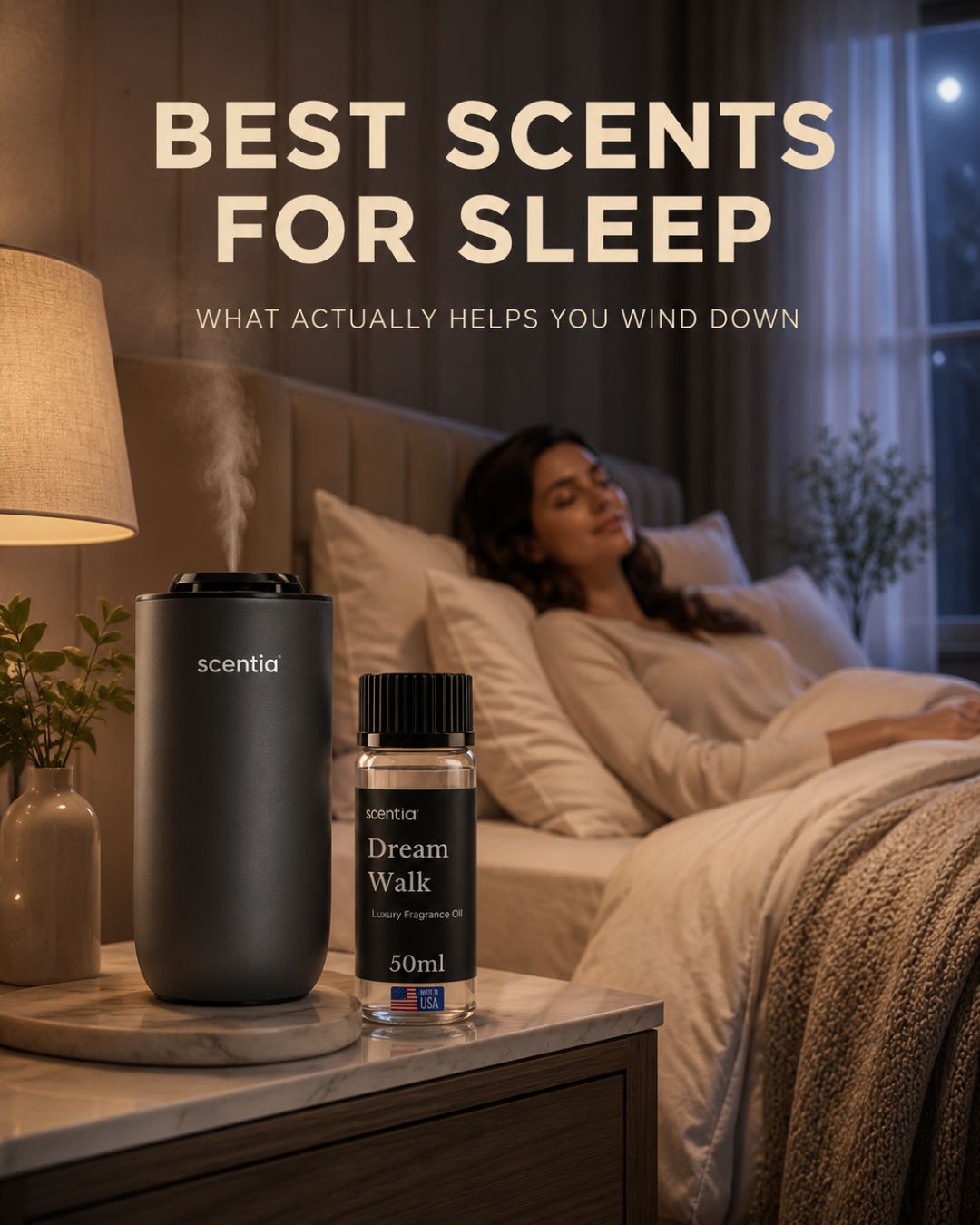
Scent is not a sleep aid and I would be careful with anyone who sells it as one. What it can be is a cue. A consistent smell attached to a consistent time of night becomes a signal your brain learns to read, in the same way a dimmed light or a particular chair does.
That framing changes what you should actually be optimising for, which is repeatability rather than potency.
Lavender, and why it is not the only answer
Lavender is the default recommendation everywhere, and it does have a genuine reputation for relaxation. It is also divisive. Plenty of people find it medicinal, or associate it with cleaning products and their grandmother's linen cupboard, and a scent you have a mild aversion to is not going to help you sleep no matter what the literature says.
If you like lavender, use it. If you have tried it and never liked it, stop trying to make it work.
What else works
Fresh and green. White tea, aloe, cucumber, bamboo. Cool, quiet, low stimulation. This is the family I would start with for most people because it is nearly impossible to find offensive at low intensity. Dream Walk sits here, built on white tea, aloe and ginger.
Soft woods. Sandalwood in particular. Warm and grounded without being sweet. Good for people who find fresh scents too clinical at night.
Light amber. Warmer again, and the most enveloping option. Works well in winter and in bedrooms that feel cold. Keep it light, because amber at full intensity is an evening-in-a-bar scent rather than a sleep one.
Soft floral. Freesia, jasmine at low levels. Jasmine is rich and can tip into too much quickly, so this is the family that most rewards restraint.
What to avoid in a bedroom
- Citrus. Bright and alerting. Excellent in the morning, working against you at eleven at night.
- Heavy gourmands. Vanilla and caramel at strength are stimulating rather than soothing, and they get cloying in a closed room.
- Anything peppery or spiced. Same problem.
- Anything strong. Which brings us to the real issue.
Intensity is the whole game
Nearly every complaint about sleeping with fragrance comes down to too much of it. A bedroom is a closed room with the door shut and little air exchange, so a setting that reads as pleasant in an open living area will be considerably heavier there.
The target is a scent you notice when you walk in and stop noticing within a minute or two. If you are still aware of it lying in bed, it is too strong.
Turn it down until you think it is not working. That is usually about right.
Run time, and the 3am problem
The mistake people make is running a diffuser all night. Two things go wrong. You develop tolerance to a scent you are continuously exposed to, so it stops registering as a cue and just becomes the smell of the room. And any change in output during the night is exactly the kind of low-level stimulus that surfaces you out of light sleep.
What works better is running it in the hour or two before bed and letting it stop. The room holds the scent, you fall asleep in it, and nothing changes at three in the morning.
A MiniPod is well sized for a bedside table and covers around 500 square feet, which is more than most bedrooms need. If you want scheduled run times, the Scentia Pod is app-controlled and can handle the timing for you.
Building the routine
The cue only works if it is consistent, so treat this like any other habit.
- Pick one scent and stay with it for at least a few weeks. Rotating defeats the purpose.
- Start it at the same point each evening, ideally attached to something you already do.
- Run it low, for a fixed period, then off.
- Do not use the same scent during the day, or you dilute the association.
That last point is the one people skip. If your bedroom scent is also your living room scent, it is not a signal, it is just your house.
If none of this shifts anything, the problem is not fragrance. Persistent trouble sleeping is worth raising with a doctor rather than solving with a diffuser.
The Spa & Wellness range is where most of the calmer blends sit, and the mood-based guide maps scents to what you want a room to do.
Frequently Asked Questions
What is the best scent for sleep?
There is no single best one. Fresh and green blends such as white tea and aloe, soft woods like sandalwood, and light amber all work well. Lavender helps many people but is genuinely divisive, and a scent you dislike will not help.
Should I run a diffuser all night?
Usually not. Continuous exposure means you stop registering the scent, and changes in output can surface you from light sleep. Running it for an hour or two before bed and letting it stop works better.
Why does my bedroom diffuser feel too strong?
A closed bedroom has very little air exchange compared with an open living space, so the same setting produces a much heavier result. Turn it down until you barely notice it.
Which scents should I avoid in a bedroom?
Citrus is alerting, heavy gourmands become cloying in a closed room, and anything peppery or spiced works against winding down.
Can scent actually help you sleep?
It works best as a consistent cue rather than a sedative. A scent used only at bedtime, at the same point each night, becomes a signal over time. Persistent sleep problems are worth discussing with a doctor.
Quiet enough to sleep in
Cold-air diffusion with intensity you can actually turn down, and scheduling on app-controlled models.

Leave a comment
All comments are moderated before being published.
This site is protected by hCaptcha and the hCaptcha Privacy Policy and Terms of Service apply.