

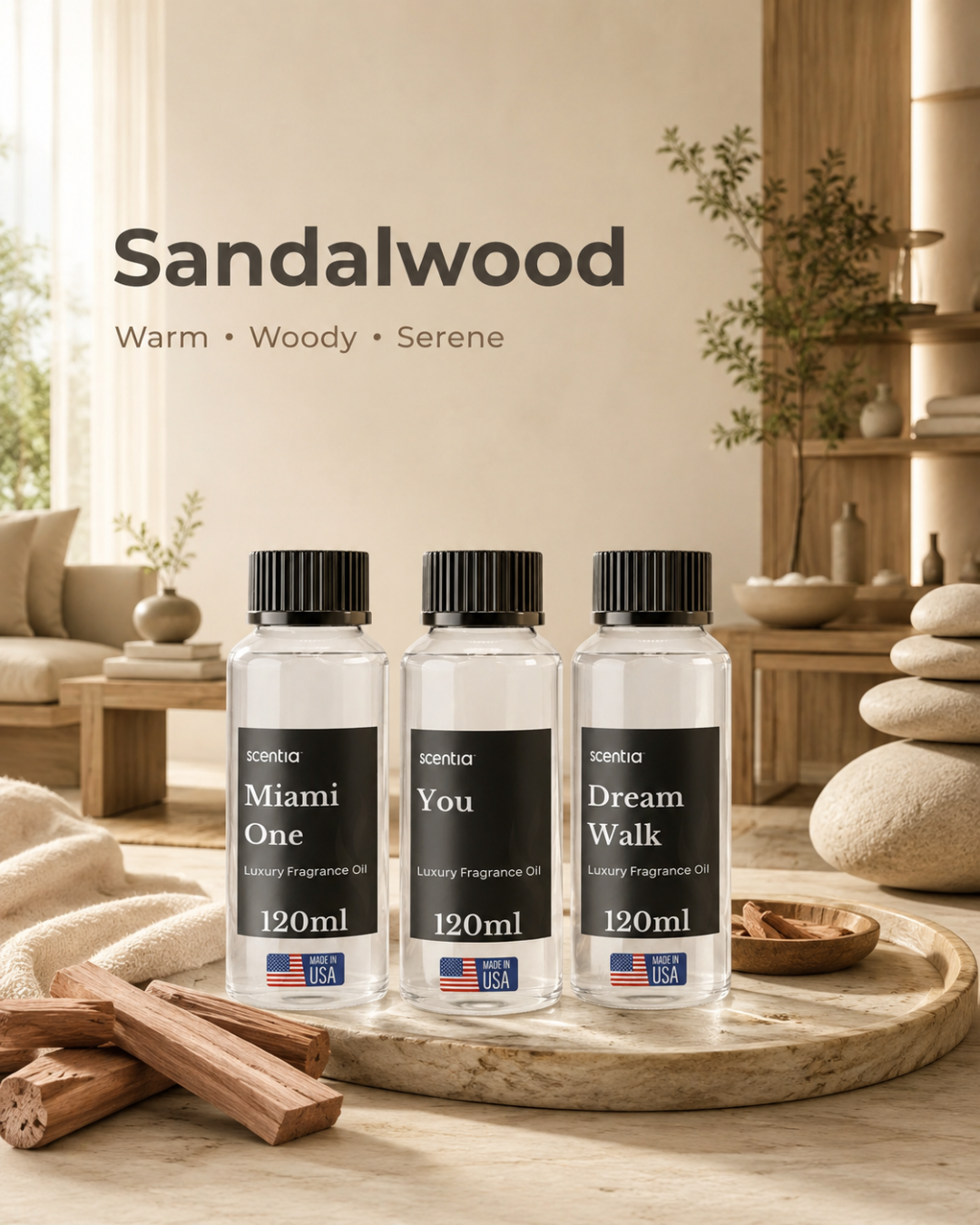
Thirty years in the ground for one of the creamiest, most versatile woods in perfumery.
Sandalwood comes from the heartwood of Santalum album, a slow-growing evergreen native to southern India, and now cultivated under careful regulation in Western Australia as well. Unlike most fragrance woods, its scent isn't in the bark or the leaves — it's locked in the heartwood, and the tree needs thirty years or more of growth before that heartwood develops enough natural oil to be worth distilling. Indian supply was harvested aggressively enough to trigger export restrictions, which is why most of the sandalwood in fine fragrance today comes from patiently managed Australian plantations instead.
What makes sandalwood so widely used is its temperament: it's warm without being sweet, woody without being sharp, and creamy in a way that almost no other wood note achieves. That neutrality lets it sit comfortably underneath very different kinds of compositions — a bold, leather-forward resort scent, a fresh spa-style blend, or a soft romantic floral — which is exactly why it shows up across three very different fragrances in our own collection rather than just one.
What sandalwood actually smells like
Creamy, milky, and warm, with a soft dryness that reads more like polished wood or warm skin than fresh-cut timber. It has none of the sharp, sappy edge of pine — instead it settles into a composition and rounds out whatever sits above it, which is why perfumers reach for it as a base so often.
Where you'll find it in the Scentia line
Sandalwood is the most-repeated note across our collection — it grounds three very different fragrances.
Sandalwood and cedarwood carry the heart, between an opening of leather and cardamom and a base of amber and musk.
Shop Miami OneCrisp citrus and eucalyptus open into jasmine and rose, finishing on a grounding base of sandalwood, sage, and mint.
Shop YouInspired by Westin® Hotels — white tea, aloe, and ginger open into cedarwood and vanilla, calmed by a base of lily, sandalwood, and musk.
Shop Dream Walk


Leave a comment
All comments are moderated before being published.
This site is protected by hCaptcha and the hCaptcha Privacy Policy and Terms of Service apply.