

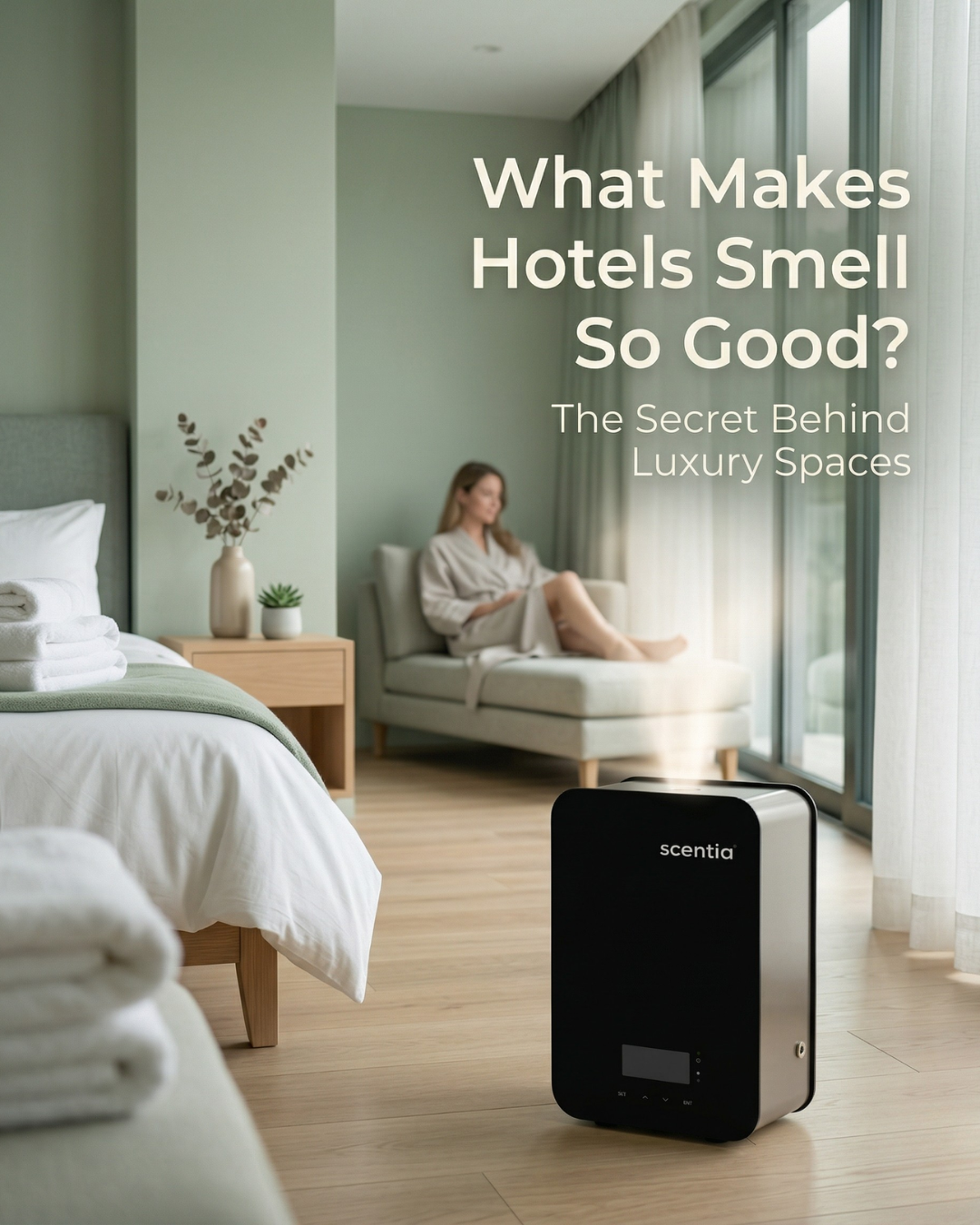
One fragrance does not work everywhere. Here's exactly which scent profiles belong in each room — and the reasoning behind the choices.
The most common mistake in home scenting is treating it like air freshener: one product, placed somewhere visible, doing its best. Hotel fragrance programs don't work that way. The lobby smells different from the spa corridor. The restaurant smells different from the guest rooms. Each space is scented for what's supposed to happen in it.
The same principle applies at home. A sandalwood-and-oud blend that's perfect for an entryway can feel heavy and oppressive in a bedroom. A light citrus that works beautifully in a kitchen reads as too thin in a large living room. Getting this right isn't complicated — but it requires matching the fragrance to the function of the space.
This guide goes room by room. For each one: the goal, the scent profiles that support it, and what to avoid. If you're still deciding which type of diffuser to use, read this first: cold-air vs ultrasonic — what's actually different.
The entryway is the most important room to get right and the one most people ignore. This is where the scent hits first — before a guest has seen the furniture, spoken to anyone, or had time to form any other impression. Get it right and the rest of the house benefits from a halo effect. Get it wrong and it's the only thing they remember.
Warm base notes — sandalwood, cedar, vetiver — work here because they're welcoming without being aggressive. They communicate "someone intentional lives here" rather than "someone just sprayed something." Light oud adds depth without weight. The goal is arrival, not assault.
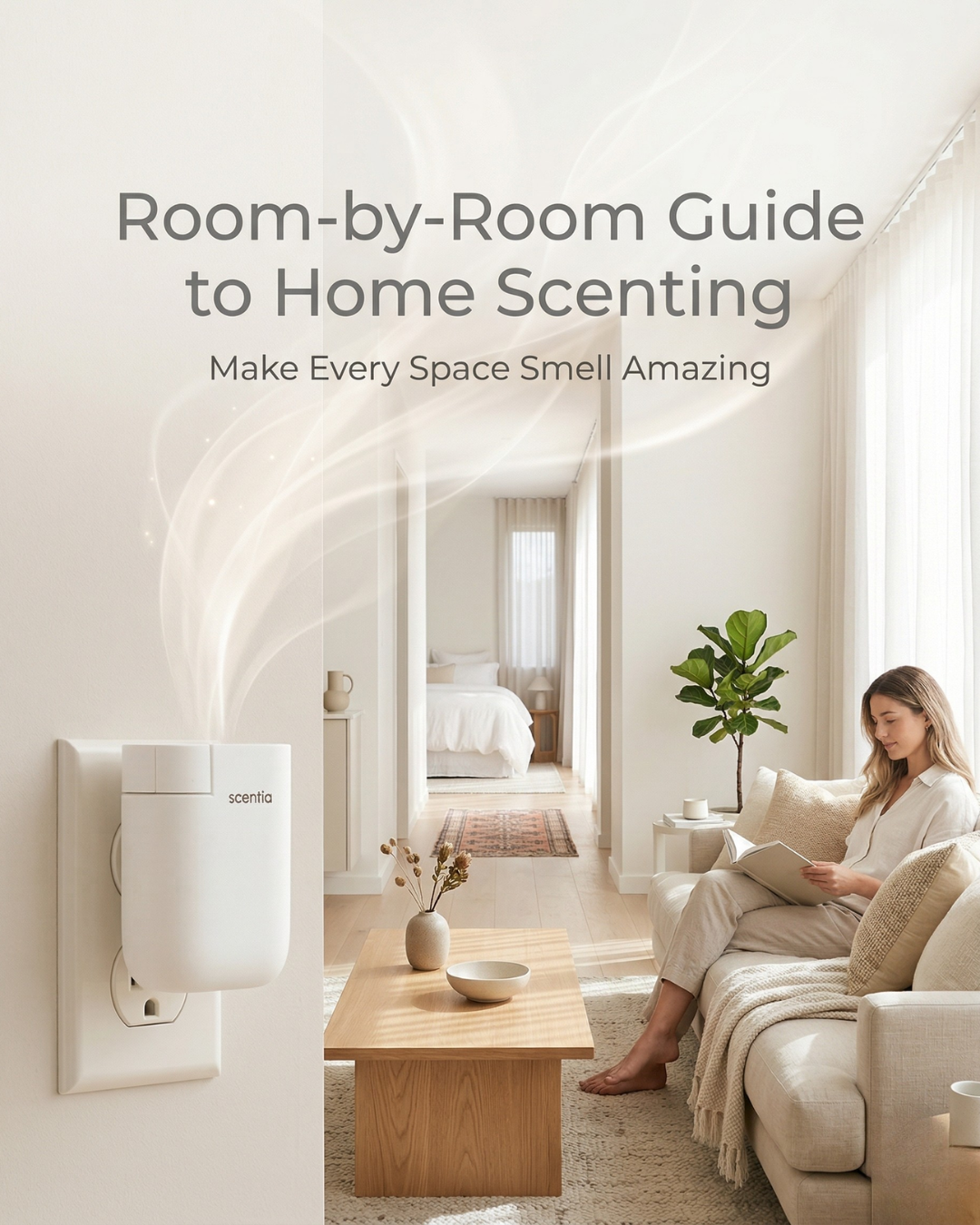
Position the diffuser at mid-height near the main airflow point — not hidden in a corner. The entryway is usually small enough that a ScentiaMiniPod or ScentiaPod at low intensity handles it without overpowering the space.
Open-plan living areas are where cold-air diffusion earns its price difference from ultrasonic. A 1,000–1,500 square foot space needs real coverage — a ScentiaPod or ScentiaMax, not a $30 ultrasonic that saturates a 6-foot radius and fades.
Fragrance choice here depends on the time of day and the vibe you're going for. During the day, lighter profiles — bergamot, white tea, soft cedar — feel appropriate and don't compete with natural light. In the evening, warmer and richer profiles can take over. Amber, sandalwood with oud, darker musks. Some people run two diffusers on separate timers for exactly this reason.
The living room is also the space where most guests form their lasting impression. Hotels put their signature scent here for a reason — it's what you remember six months later. Don't undershoot it.
The bedroom is where people consistently over-scent. A fragrance that works in the living room — sandalwood, oud, rich amber — will feel too heavy in a room where the goal is sleep. Strong base notes that you notice consciously are exactly what you don't want when you're trying to wind down.
White tea and clean linen profiles are the Westin's signature approach and there's a reason it travels well. Light, fresh, slightly cool — present enough to notice when you walk in, background within ten minutes. Lavender has been studied for its effect on cortisol levels and while the research is mixed on magnitude, the direction is consistent: it's calming. Eucalyptus and green tea notes work similarly for people who find straight lavender too floral.
Run the bedroom diffuser on a timer that shuts off an hour after you typically fall asleep. You don't need it running all night, and your oil will last significantly longer. The ScentiaMiniPod is the right size for most bedrooms — small, quiet, and wireless so placement isn't limited by outlets.
Scent and cognition research is genuinely interesting here. Studies on peppermint and citrus consistently associate these notes with perceived alertness. The effect isn't dramatic — it's not going to replace sleep or coffee — but it's real enough that hotel business centers and conference rooms tend to use lighter, fresher profiles than lobby spaces.
For a home office, citrus-forward blends with green notes work well during focused work hours. Grapefruit in particular. Light eucalyptus if you want something more spa-adjacent. The key is keeping it subtle — a diffuser running at full intensity in a small office will overwhelm the space and defeat the purpose.
One practical note: if you're on video calls frequently, scent intensity matters more than profile. Nobody on the other end can smell it, but if you're consciously aware of it, it's too strong. Dial it back until it's background.
Kitchens are the hardest room to scent well because they're already doing something with smell. Cooking creates its own atmosphere, and a diffuser running while you're making garlic and onion is going to produce something strange.
The practical approach: run the kitchen diffuser in the morning before cooking starts and in the evenings after things have cleared. Light, airy profiles — sea salt, coastal, soft citrus with driftwood — work better than anything heavy or sweet. The goal is freshness, not fragrance.
For the dining room specifically, the scent should step back when food is present. People's ability to taste food is directly tied to what they're smelling. A strong diffuser running during dinner is actually counterproductive. Light or off during the meal, running before guests arrive to set the atmosphere.
Bathrooms are usually small, which means intensity is the main variable to control. A ScentiaMiniPod at 15–20% is enough. More than that in a small bathroom and it becomes overwhelming within minutes.
Spa-adjacent profiles work best here — eucalyptus, white tea, soft lavender, sea salt. These are what hotel bathrooms actually use. They communicate clean and calm without competing with soaps and shampoos, which already have their own scent profiles.
One thing worth noting: bathrooms with poor ventilation trap scent more than other rooms. If yours retains smells, start at a very low intensity and adjust up over a few days.
The layering question
Once you have individual rooms dialed in, the next question is whether adjacent spaces should match or contrast. There's no universal rule, but there's a useful principle from hotel design: spaces that flow into each other physically should share a scent family, not necessarily the same fragrance.
If your entryway opens directly into your living room, using Miami One in the entryway and Coastal in the living room will feel disjointed — one is warm and woody, the other is fresh and marine. Both are Luxury Resort Collection oils, but very different characters. Better to keep them in the same general family (both warm, or both fresh) and let the transition feel natural.
Where contrast works is between spaces that are genuinely separated — a bedroom at the end of a hallway, a home office with a door. Those rooms serve different purposes and can wear different scents without it feeling wrong. If you're scenting a larger home across multiple zones, the large home scenting guide covers placement and coverage in detail.
THE PRACTICAL RULE
Start with one room. Get it right over a week or two — right fragrance, right intensity, right timer schedule. Then add a second room. Working incrementally means you can actually tell what's working and what isn't. Scenting an entire home at once makes it impossible to troubleshoot.
Not sure what works in your space?
The Fragrance Sample Collection — 6 resort-inspired oils in 20ml sizes. Try them all before committing to a full bottle.
Not sure which fragrance fits your home? See how to choose a home fragrance by mood, fragrance family and room →
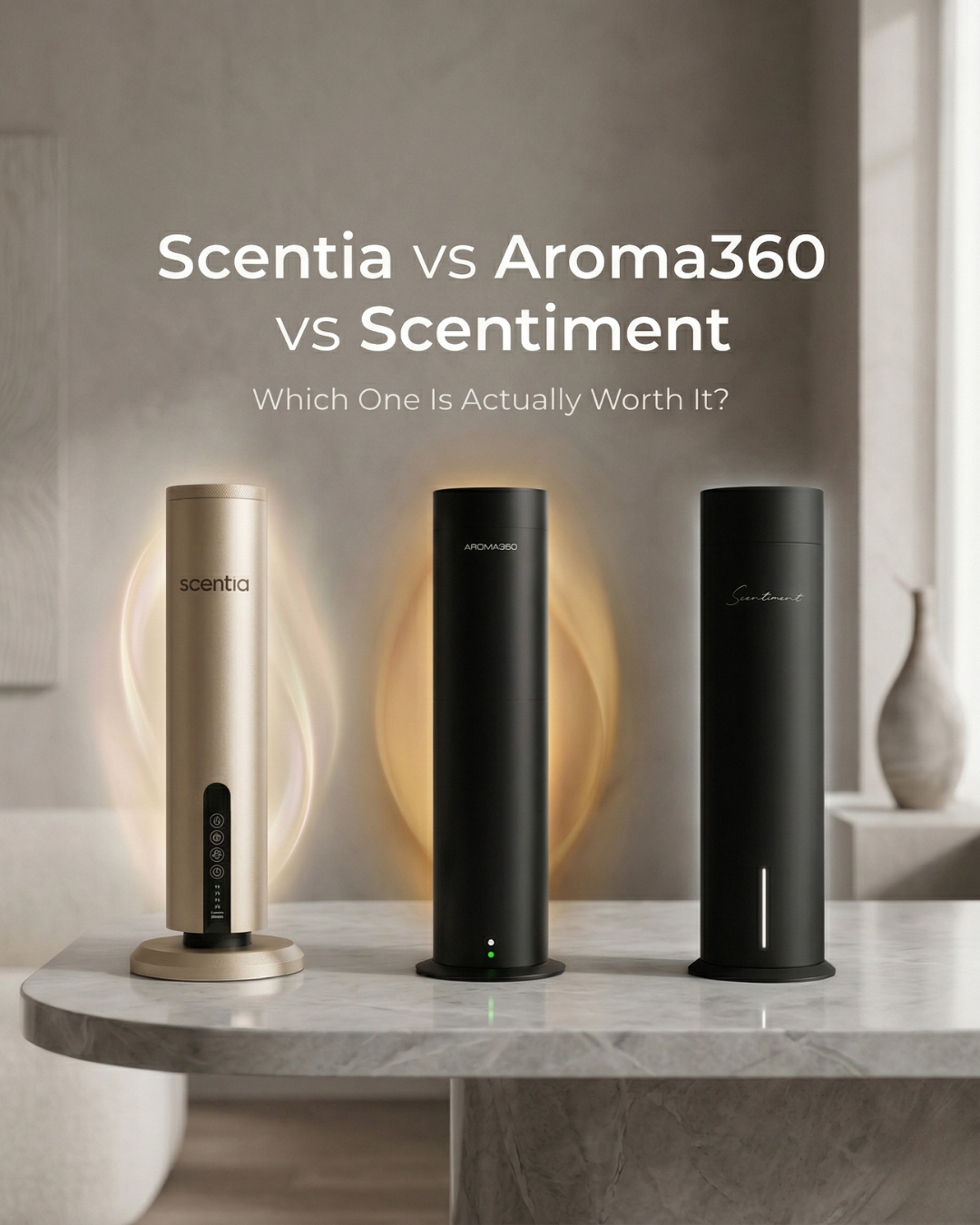
Need help choosing the equipment too? Use the Scentia diffuser comparison. For fragrance selection beyond individual rooms, see How to Choose a Scent for Your Home.

Leave a comment
All comments are moderated before being published.
This site is protected by hCaptcha and the hCaptcha Privacy Policy and Terms of Service apply.