

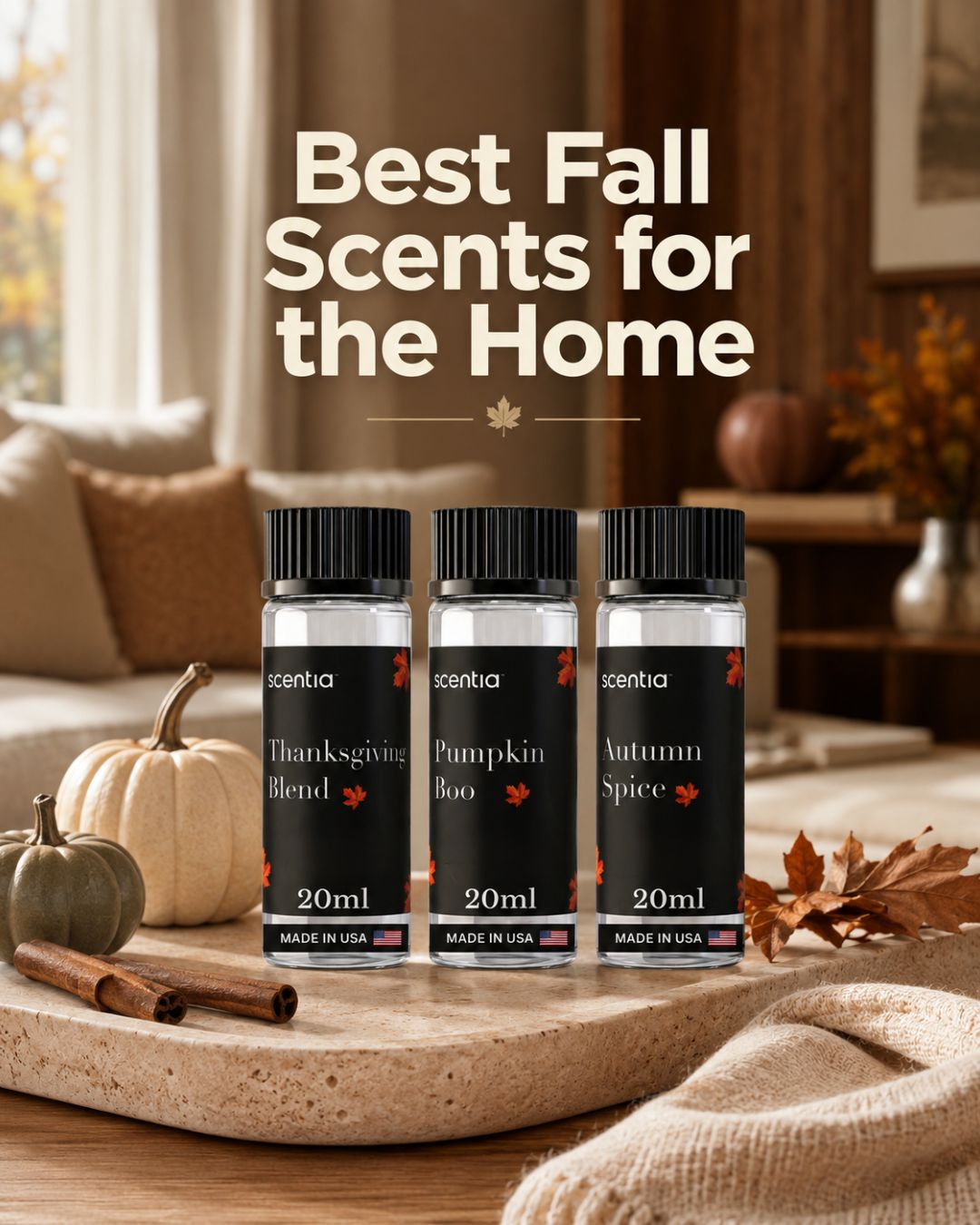
Fall home fragrance has a pumpkin problem. Every mass-market brand runs the same sweet, heavy, food-adjacent blend from September, and by the third week of October most homes smell like a seasonal aisle rather than a season.
The notes that actually read as autumn are warmer and drier than that. Here is what I would run instead.
What autumn actually smells like
Think about what changes outdoors. The air gets drier and cooler. Leaves break down. Wood smoke appears. Everything gets a little dustier and a little sweeter at the edges. Nothing in that is caramel.
Translated into fragrance, the season lives in three places: warm woods, resins, and dry spice. Sweetness belongs in the background, not the foreground.
Warm woods
Sandalwood is the anchor. Creamy, soft, slightly milky, and it holds a room without pushing. Cedar is drier and sharper if you want something with more edge. Both work from late September straight through to the holidays, which makes them the efficient choice if you are only buying one thing.
Santal is the straightforward pick here.
Amber and resin
Amber is where autumn gets its warmth. It is soft, slightly sweet, faintly powdery, and it does the thing gourmands are trying to do without the sugar. Incense and myrrh sit alongside it and add a dry, smoky lift.
Amber blends are also the ones that feel most like an evening. If your living room is where people gather after dark from October onward, this is the family for it.
Dry spice
Cinnamon, clove, cardamom and black pepper, used sparingly. The distinction that matters is between spice as a note and spice as a dessert. Cardamom over wood reads as sophisticated. Cinnamon over vanilla reads as a bakery.
If you want spice, look for it listed in the middle of a blend rather than the top. Anywhere near the top and it will be the only thing you smell.
Where sweetness belongs
Vanilla and tonka are not the enemy. They are just badly used. As a base note under wood and amber, vanilla adds roundness and stops the blend feeling austere. As the headline, it takes over.
The vanilla note page goes into how it behaves in a blend.
Room by room
| Room | What to run | Why |
|---|---|---|
| Living room | Amber and wood | Holds through an evening, warm without being sweet |
| Entryway | Dry spice over wood | First impression, and the space people pass through rather than sit in |
| Dining room | Light wood only, or nothing | Anything sweet or spiced competes with the food |
| Bedroom | Soft amber, low intensity | Warm enough for the season, quiet enough to sleep in |
| Kitchen | Fresh or citrus, not autumnal | Fall blends and cooking smells fight each other |
The kitchen row surprises people every year. Autumn is exactly when you cook the most, and a spiced blend running alongside a roast does neither any favours. Keep the kitchen clean and neutral and let the rest of the house carry the season. Our room-by-room guide covers the general principle.
When to switch over
Earlier than you think. Fragrance takes a few days to settle into a space and a few more before you stop noticing it consciously, so a scent you switch on the first cold morning is only really working a week later.
Mid-September for the first change, and hold the heavier amber and spice blends until October. Going full autumn in August is how you get sick of it by Halloween.
What to avoid
- Anything with "pumpkin" or "pie" in the name, unless you specifically want that.
- Spice at the top of the blend rather than the middle.
- Running the same autumn scent in every room. One family, varying intensity, is enough.
- Turning intensity up because it is cold. Closed windows mean less airflow, so you need less, not more.
That last one catches everyone. Autumn is the season when homes are sealed up, and the same setting that was subtle in July is heavy in November.
The Fall Collection is built around wood, amber and dry spice rather than dessert. If you would rather test a few before committing, the starter kits pair a diffuser with oils.
Frequently Asked Questions
What are the best fall scents for a home?
Warm woods like sandalwood and cedar, amber and resin, and dry spices like cardamom and clove. Keep sweetness as a base note rather than the headline.
When should I switch to fall scents?
Mid-September for lighter wood blends, October for heavier amber and spice. Fragrance takes several days to settle, so switching early means it is working when the season actually arrives.
Why does my fall candle smell too sweet?
Most mass-market autumn blends put vanilla, caramel or pumpkin at the front. Look for blends where wood or amber leads and the sweetness sits underneath.
Should I use fall scents in the kitchen?
Usually not. Spiced and sweet blends compete with cooking, and autumn is when you cook most. Keep the kitchen fresh or citrus and let other rooms carry the season.
Do I need to turn my diffuser up in winter?
Turn it down. Closed windows mean less air exchange, so the same setting that felt subtle in summer will feel heavy once the house is sealed up.
Autumn without the dessert
The Fall Collection is built on wood, amber and dry spice.



Leave a comment
All comments are moderated before being published.
This site is protected by hCaptcha and the hCaptcha Privacy Policy and Terms of Service apply.