

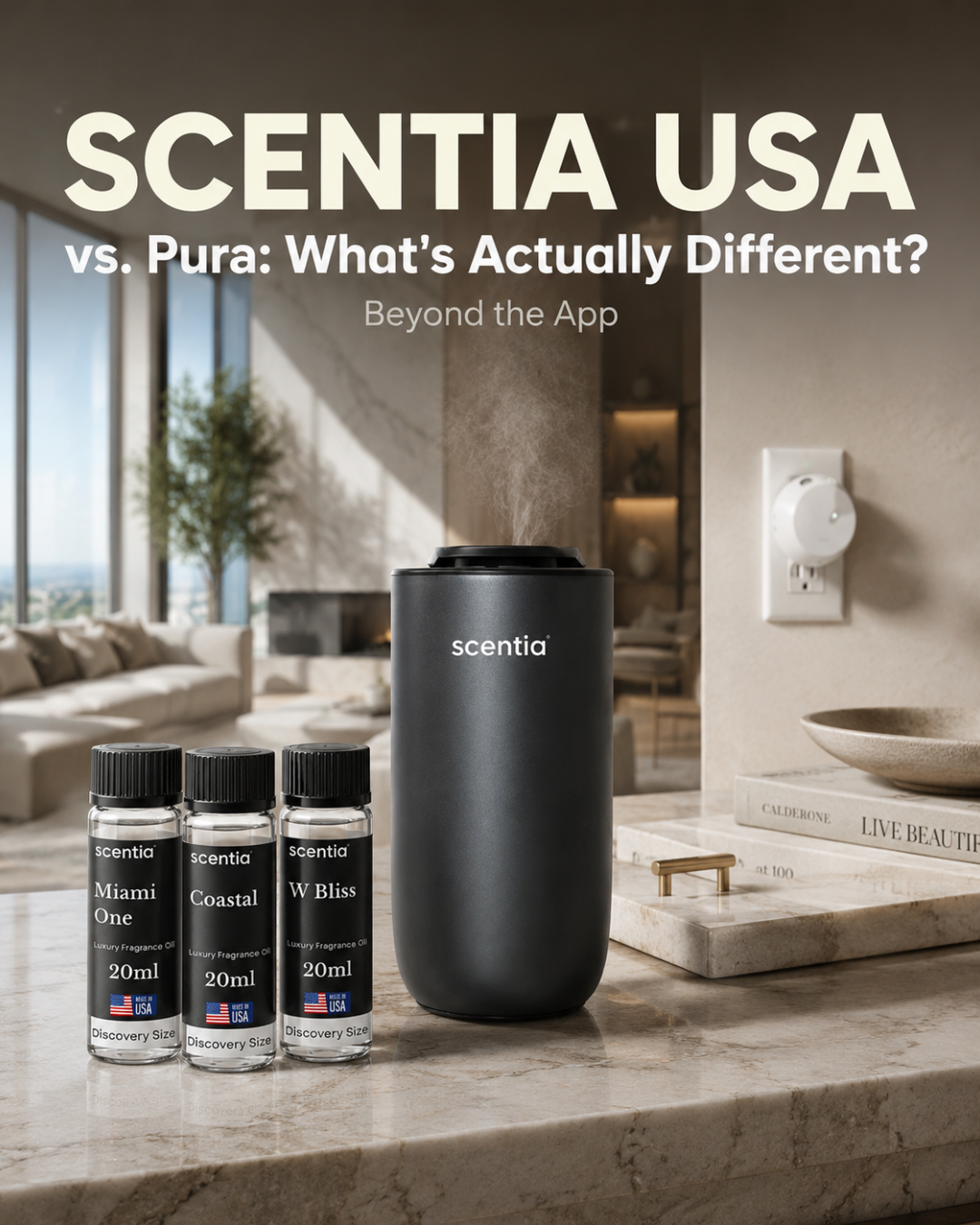
If you're comparing diffuser brands, the marketing tends to focus on smart features and subscription perks. The part that actually determines how your room smells — the diffusion technology itself — usually gets buried. Here's the honest breakdown.
Pura is one of the most recognizable names in home fragrance tech, and for good reason — millions of people use it, and the app experience is genuinely well built. If you're weighing it against Scentia, this isn't going to tell you Pura is bad. It's going to explain what the two technologies actually do differently, so you can decide what matters for your space.
The core difference: heat vs. cold air
Pura diffusers work by warming a fragrance vial with an internal heater and fan. It's an effective way to push scent into a room quickly. But heat changes fragrance oil at a molecular level — the lighter top notes that give a scent its initial character can degrade or shift the longer they're exposed to warmth. That's part of why a heated diffuser can smell slightly different at the end of a vial's life than it did on day one.
Every diffuser in the Scentia line — MiniPod, Pod, Max, and Casa — uses cold-air diffusion instead. There's no heating element. The fragrance oil is dispersed as a fine, cold mist, which means the oil's chemical structure stays intact from the first use to the last. What you smell is what the fragrance was actually designed to smell like.
Side-by-side comparison
| Pura | Scentia | |
|---|---|---|
| Diffusion method | Heated (internal heater + fan) | Cold-air, across the entire line |
| Entry price | $49.99 (Pura 4) | $39.99 (MiniPod) |
| Coverage detail | Described as "medium" or "large" rooms, no specific square footage | Stated in square feet for every tier: 500 / 600 / 1,500 / 5,500 sq ft |
| App control | Yes, across the lineup | Yes, on Pod, Max, and Casa. MiniPod uses dual car/home mode with 3-hour auto shutoff instead |
| Fragrance sourcing | 300+ scents, largely licensed from outside fragrance and lifestyle brands | Hotel-inspired originals developed for the brand |
| Subscription | Yes, 4/8/12-week refill intervals | Yes, Subscribe & Save available |
| Made in | Not specified | USA |
Why coverage in square feet actually matters
One thing that's easy to overlook when comparing diffusers: knowing the exact square footage a device is rated for helps you avoid buying something too small for your space (weak, inconsistent scent) or too large for it (an overwhelming room). Scentia publishes this number for every device. Pura's product pages describe tiers as "small," "medium," or "large" rooms without a specific figure, which makes it harder to know exactly what you're getting before you buy.
Not sure which coverage tier fits your space? Our diffuser comparison guide breaks down the MiniPod, Pod, Max, and Casa side by side, or you can walk through which diffuser is right for you based on room size and use case.
What you're actually paying for
It's worth separating two things that often get bundled together in diffuser marketing: the device, and the fragrance.
Pura's strength is the device — a well-designed smart gadget with a large app-connected ecosystem and access to fragrances from brands you may already recognize.
Scentia's approach starts from the fragrance itself. The scents are developed in-house, inspired by luxury hotel and resort fragrancing, and the cold-air technology exists specifically to protect that fragrance from the moment it's diffused. It's less "buy a smart home gadget that also does scent" and more "buy the scent experience, with technology built to preserve it."
Neither approach is wrong — it depends on whether you're shopping for a device first or a fragrance experience first. If you're also weighing other cold-air brands, our Scentia vs. Aroma360 vs. Scentiment comparison covers that ground too, and you can browse the full fragrance oil collection to see what's behind the technology.
Frequently asked questions
Cold-air diffusion disperses fragrance oil as a fine mist without applying heat, which preserves the oil's original scent profile. Heated diffusion warms the oil to release fragrance faster, but heat can alter the oil's chemical structure and shift how the top notes smell over time.
No. Pura diffusers use an internal heater and fan to release fragrance from the vial, which is a heat-based diffusion method rather than cold-air.
The Scentia MiniPod starts at $39.99 and covers up to 500 square feet. It runs in dual mode for car or home use and includes an automatic 3-hour shutoff.
Yes. Every Scentia diffuser has app control except the MiniPod, which is designed as a simple dual-mode car and home device with an automatic 3-hour shutoff instead of app scheduling.
See the cold-air difference for yourself
Explore the full Scentia diffuser line, starting at $39.99.
Shop DiffusersPricing and product details for Pura are accurate as of publication and sourced from pura.com. Product specifications change; please verify current pricing directly with each brand before purchasing. Have more questions? Visit our fragrance knowledge center for answers on diffuser care, oil longevity, and setup.


Leave a comment
All comments are moderated before being published.
This site is protected by hCaptcha and the hCaptcha Privacy Policy and Terms of Service apply.