

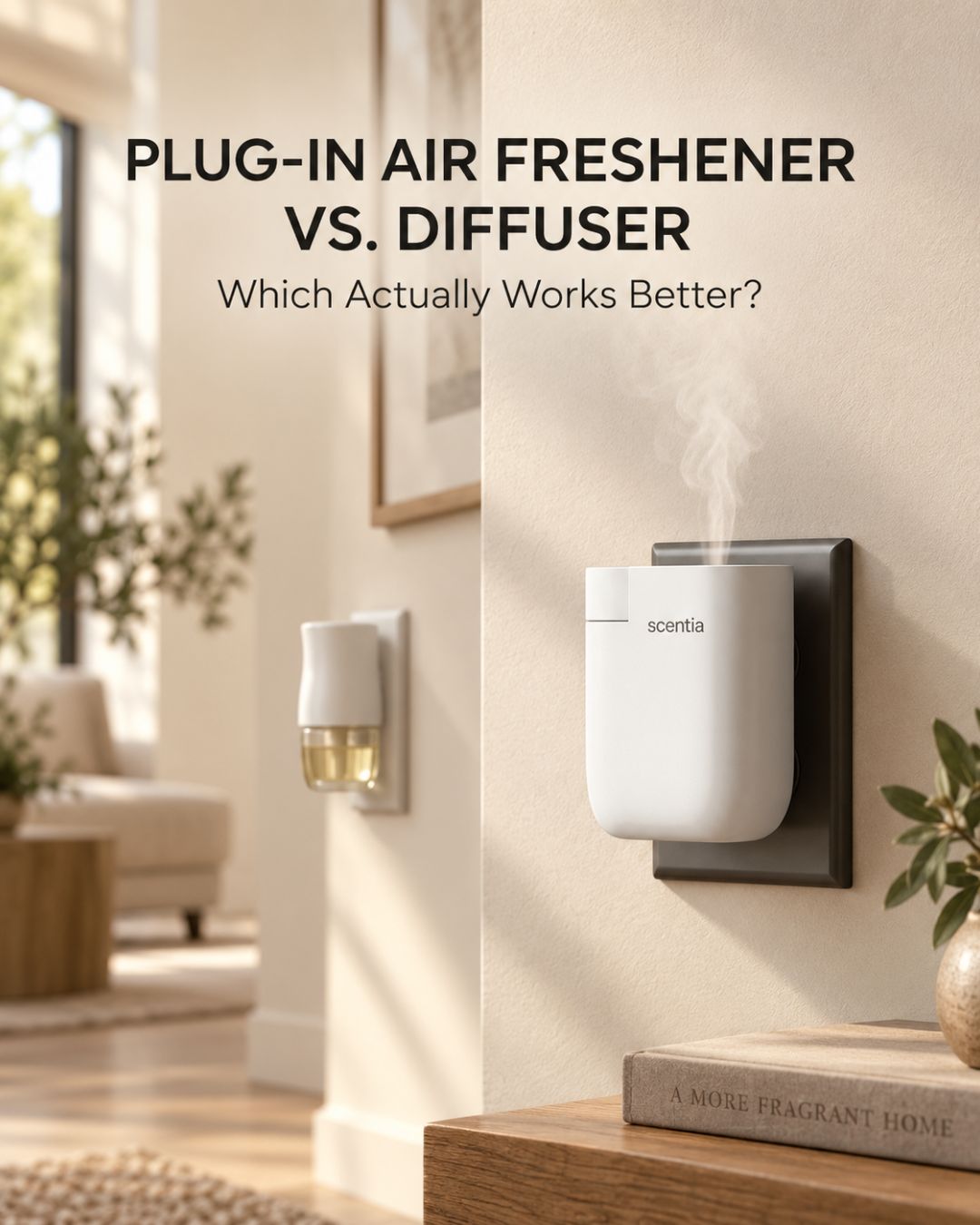
Both a plug-in air freshener and a diffuser aim to keep a room smelling good, but the technology, scent quality, and long-term cost differ more than people expect.
How Each One Works
A standard plug-in air freshener uses gentle heat to slowly evaporate a scented oil or gel cartridge from an outlet. A cold-air diffuser, like the Scentia Pod, atomizes pure fragrance oil into a fine mist using air pressure rather than heat, on a schedule you control.
Scent Quality
Heat-based plug-ins tend to cook the fragrance oil slightly as they evaporate it, which can flatten the scent over time and shift its character, especially as the cartridge nears empty. Cold-air diffusion doesn't apply heat, so the fragrance stays true to its original formulation from first use to last.
Coverage
Plug-in fresheners are built for a single small-to-medium room and lose effectiveness quickly outside that space. Cold-air diffusers scale much further — the compact MiniPod suits a desk or bedroom, the Scentia Max covers larger living spaces, and whole-home HVAC-connected units like the Scentia Casa cover thousands of square feet.
Cost Over Time
Plug-in cartridges are typically used up within a few weeks and discarded entirely once empty. Diffuser oil bottles, especially on interval settings, tend to stretch further and the diffuser hardware itself is reusable indefinitely — only the oil needs replacing. See our cost breakdown for the numbers.
Control and Customization
Most plug-ins offer one or two fixed intensity settings. Diffusers typically offer adjustable intensity, interval timing, and in some cases app control — letting you fine-tune scent strength by room and time of day rather than accepting a fixed output.
Which Should You Choose?
If you want the lowest upfront cost for a single small space and don't mind replacing cartridges every few weeks, a plug-in is a reasonable choice. If you want stronger, truer scent, broader coverage, and lower cost over time, a cold-air diffuser is the better long-term investment. For the car-specific version of this comparison, see our Car Diffuser vs. Air Freshener guide.
Frequently Asked Questions
Do plug-in air fresheners smell weaker over time?
Often, yes. Heat-based evaporation can flatten the fragrance as the cartridge empties, especially toward the end of its life.
Is a diffuser more expensive than a plug-in air freshener?
The diffuser hardware costs more upfront, but ongoing oil costs on interval settings often work out cheaper per week than continuously replacing plug-in cartridges.
Can a plug-in air freshener cover a large room?
Not effectively — plug-ins are designed for a single small-to-medium space, while cold-air diffusers scale to much larger areas.
Which is better for someone with fragrance sensitivities?
A diffuser's adjustable intensity and interval settings generally offer finer control over scent strength than a plug-in's fixed output.

Leave a comment
All comments are moderated before being published.
This site is protected by hCaptcha and the hCaptcha Privacy Policy and Terms of Service apply.