

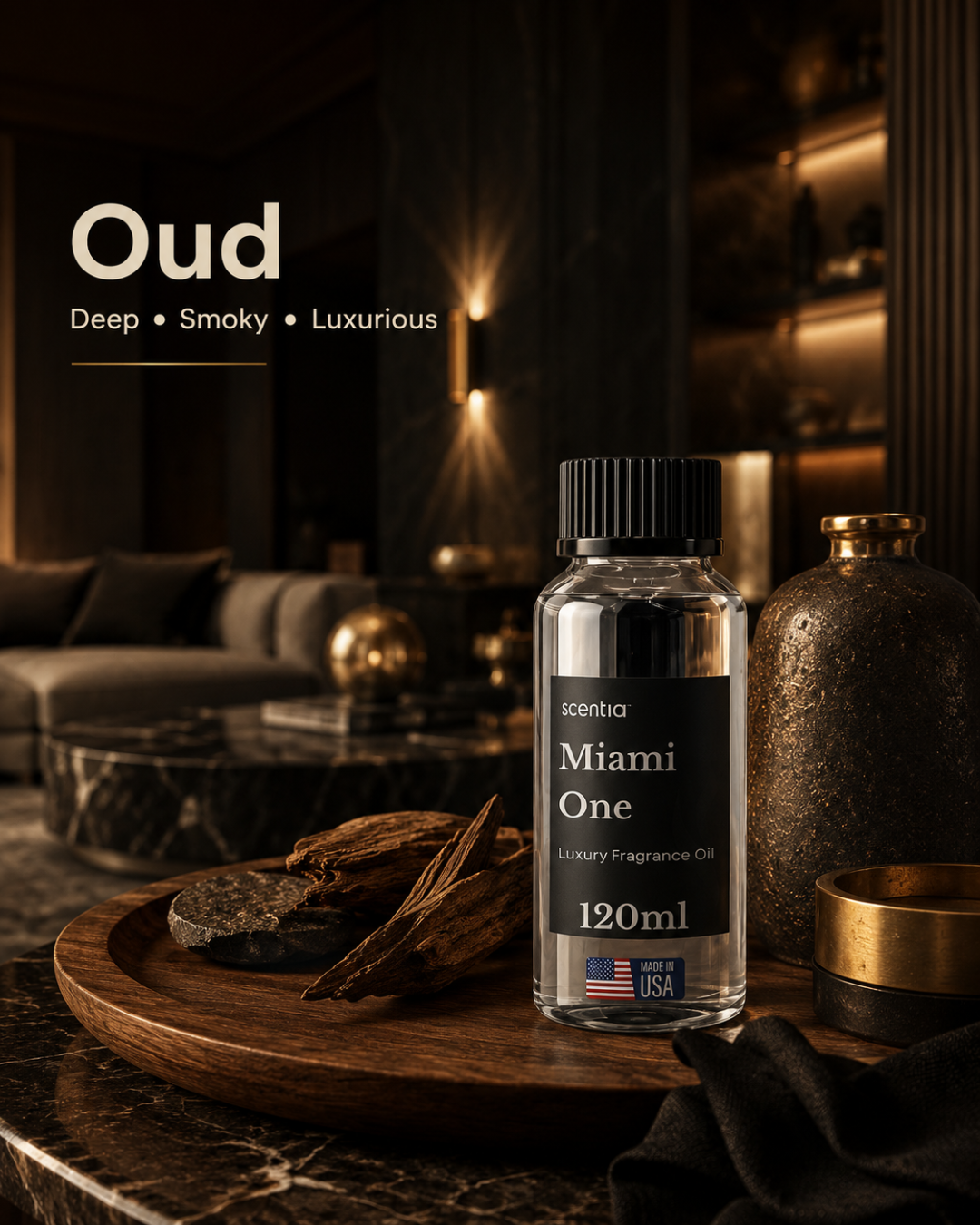
The rarest wood in perfumery — and one that only exists because a tree got sick.
Oud, also called agarwood, is the dark, resin-saturated heartwood produced by Aquilaria trees after they're infected by a specific mold. In response to that infection, the tree floods the affected wood with a dense, fragrant resin over the course of decades, slowly transforming ordinary pale timber into the prized blackwood perfumers reach for. Only a small percentage of wild trees ever develop this naturally, and wild oud from Southeast Asia remains among the most expensive raw materials on earth — at times pricier per gram than gold. Most of today's supply instead comes from cultivated Aquilaria plantations, where growers can encourage the infection more reliably.
Oud's character shifts significantly depending on how it's sourced and blended. Traditional, more concentrated versions can read intensely smoky and animalic. Modern Western interpretations — the kind most home fragrances use — lean cleaner and drier, closer to polished smoke and refined wood. Even in that gentler form, oud carries an unmistakable sense of weight, which is why it's used sparingly: a small amount is enough to give a composition real gravity and presence.
What oud actually smells like
Deep, woody, and faintly smoky, with a resinous warmth and a subtle animalic edge. Modern interpretations tend toward clean, polished smoke rather than anything raw, but even in that refined form oud reads as serious and grounding — the note that gives a fragrance its sense of weight.
Where you'll find it in the Scentia line
Oud gives our signature resort fragrance its final, grounding depth.
Inspired by 1 Hotel® Miami Beach — leather and cardamom open the fragrance, sandalwood and cedarwood carry the heart, and oud settles into the base alongside amber and musk.
Shop Miami One

Leave a comment
All comments are moderated before being published.
This site is protected by hCaptcha and the hCaptcha Privacy Policy and Terms of Service apply.